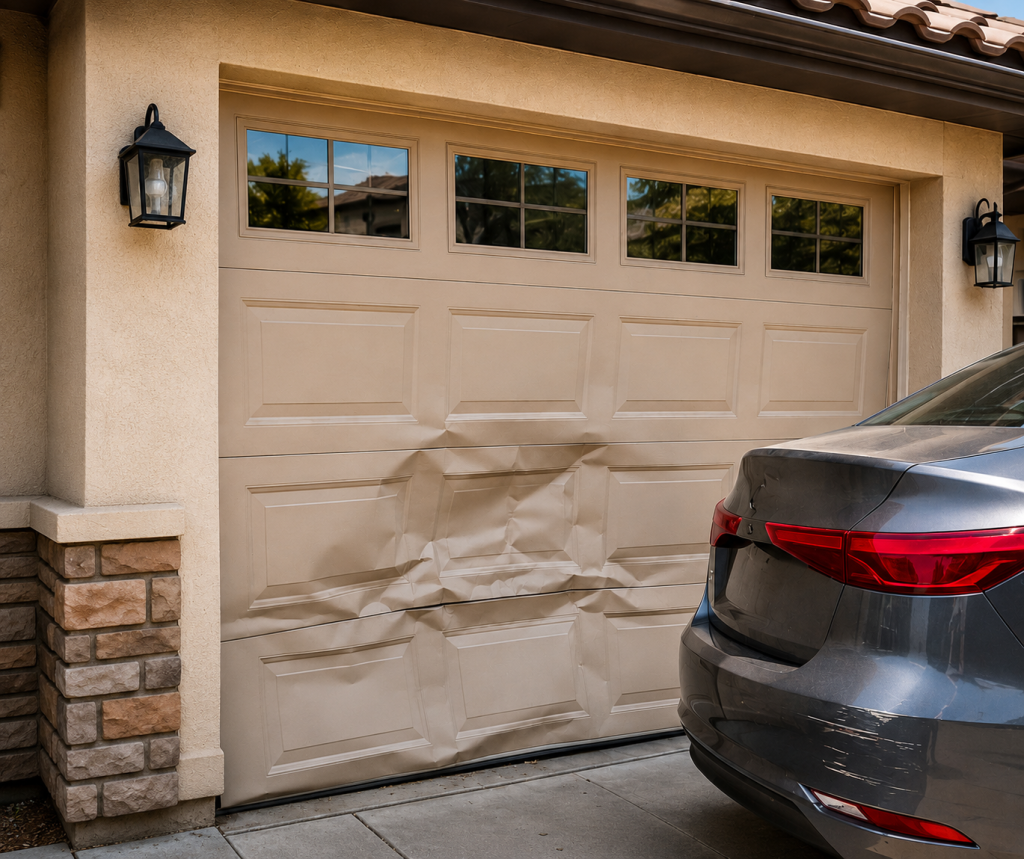
What to Do If You Accidentally Hit Your Garage Door With Your Car

car crashed into garage

It happens faster than you think.

Maybe you started backing out before the garage door was completely open. Maybe you accidentally put the car in reverse. Or perhaps someone pulled into the garage a little too quickly.

Now you’re staring at a bent, cracked, or partially knocked-off-track garage door and wondering what to do next.

First, don’t assume the damage is only cosmetic. Even a relatively minor impact can damage the panels, tracks, rollers, cables, hinges, or garage door opener. Continuing to operate the door after an accident can turn a repairable problem into a much more expensive garage door replacement.

At Good Guys Garage Doors, we help homeowners throughout San Diego County diagnose and repair damaged garage doors. Here’s what you should do if you’ve accidentally hit your garage door with your vehicle.


1. Stop Using the Garage Door

The most important thing you can do after hitting your garage door is simple:

Don’t keep opening and closing it to see if it still works.

A garage door can appear relatively normal while having hidden damage.

The impact may have:

  • Bent a track
  • Knocked a roller out of position
  • Damaged a hinge
  • Shifted a panel
  • Created cable tension problems
  • Damaged the opener attachment point

Trying to operate the door can make these problems significantly worse.

For example, a slightly bent track might be repairable. But forcing the door through that track can cause a roller to come out, potentially leaving the entire door crooked or hanging.

If anything looks unusual, leave the door where it is and have it inspected.


2. Check the Door From a Safe Distance

You don’t need to disassemble anything to perform a basic visual inspection.

Look at the garage door from inside and outside.

Check for:

  • Bent or cracked panels
  • Gaps between sections
  • Rollers outside the tracks
  • Bent tracks
  • Loose hinges
  • Hanging or loose cables
  • A door sitting crooked in the opening
  • Damaged weatherstripping
  • Broken windows
  • Damage where the opener connects to the door

Pay particular attention to whether one side of the door appears higher than the other.

A crooked garage door can indicate a cable, roller, track, or structural problem.

If you see a loose cable, damaged spring, or door hanging significantly out of position, stay clear of the door and contact a professional.


3. Don’t Try to Push the Door Back Into Place

This is where a relatively inexpensive repair can become an expensive one.

Homeowners sometimes see a dented garage door and think they can simply push or hammer the panel back into position.

Garage doors don’t work like ordinary sheet metal.

The individual sections are part of a larger mechanical system that must travel through tracks while remaining properly aligned and balanced.

Trying to straighten a damaged section yourself can:

  • Crack the panel
  • Damage the reinforcement
  • Misalign hinges
  • Push rollers out of position
  • Damage the track
  • Create additional stress on the door

And if the impact has affected the spring or cable system, attempting to manipulate the door can be dangerous.

Get the door inspected before trying to straighten anything.


4. Check Whether the Garage Door Is Off Track

One of the most common problems after a vehicle impact is a garage door coming partially off track.

Signs include:

  • Rollers outside the track
  • Door sitting crooked
  • Large gaps along one side
  • Track visibly bent outward
  • Door jammed halfway open
  • Loud grinding or scraping

A garage door off track should generally not be operated.

Continuing to run the opener can pull the door farther out of alignment and damage additional components.

In severe cases, sections of the door can become unstable.

If your garage door is off track after being hit by a car, call for professional garage door repair.


5. Determine Whether the Panel Can Be Replaced

Here’s some good news:

Hitting your garage door doesn’t automatically mean you need an entirely new door.

In many situations, the damaged garage door section can be replaced individually.

Panel replacement may make sense when:

  • Damage is limited to one section
  • The remaining door is in good condition
  • Replacement sections are still available
  • The tracks and hardware haven’t suffered major damage
  • The door isn’t already near the end of its lifespan

A professional can identify the manufacturer and model to determine whether a matching replacement section is available.

However, panel replacement isn’t always the best option.


6. When Should You Replace the Entire Garage Door?

Sometimes replacing the complete door makes more financial sense than repairing accident damage.

Replacement may be the better choice if:

  • Multiple panels are damaged
  • The door has significant structural damage
  • Replacement sections are discontinued
  • The tracks are severely damaged
  • The door is already old
  • The door has previous rust or damage
  • Repair costs approach the cost of replacement

This is particularly important with older garage doors.

You don’t want to spend significant money repairing a 20-year-old door only to replace another major component shortly afterward.

At Good Guys Garage Doors, our goal is to explain both options so you can determine whether repair or replacement provides the better long-term value.


7. Don’t Forget About Hidden Hardware Damage

The panel usually gets all the attention because it’s the easiest damage to see.

But the hardware behind the door can be just as important.

A vehicle impact can affect:

Hinges

Hinges can bend or pull away from the door sections.

Rollers

Rollers can become damaged or partially leave the track.

Tracks

Even a small bend can cause binding or rough operation.

Cables

An impact that knocks the door out of alignment can affect cable tension.

Springs

The impact may change the door’s balance or place abnormal stress on the spring system.

Opener

If the door was pushed while connected to the opener, the trolley, rail, arm, or mounting points may have been damaged.

That’s why a complete safety inspection is important after an impact.


8. Can You Still Open the Garage Door to Get Your Car Out?

This depends entirely on the damage.

If the door is visibly:

  • Crooked
  • Off track
  • Hanging
  • Binding
  • Supported by loose cables
  • Structurally damaged

Don’t operate it.

Trying to get your vehicle out could turn a damaged door into a collapsed door.

If your vehicle is trapped inside, tell the garage door company when you call. A technician can evaluate the safest way to secure or open the door.

It’s inconvenient—but damaging the entire system or risking injury is much worse.


9. Will Homeowners or Auto Insurance Cover the Damage?

Depending on your policy and how the accident occurred, damage to a garage door may potentially be covered by homeowners insurance, auto insurance, or another applicable policy.

Coverage varies significantly, so contact your insurance provider directly before assuming the repair will or won’t be covered.

It can be helpful to document:

  • Photos of the damage
  • Photos of the vehicle
  • Date and approximate time of the accident
  • Professional repair estimate
  • Recommended repairs or replacement

Avoid making permanent repairs before documenting the damage if you intend to file a claim, unless temporary work is necessary to secure the property.


10. What If the Garage Door Still Works?

This is where homeowners often get themselves into trouble.

The door gets hit.

It has a dent.

But you press the button and it still opens.

So everything must be okay, right?

Not necessarily.

Damage can create additional resistance that isn’t immediately obvious. Your garage door opener may compensate temporarily by working harder.

Over time, that extra strain can contribute to:

  • Opener failure
  • Roller wear
  • Track damage
  • Hinge failure
  • Panel cracking

If your garage door was struck hard enough to visibly damage it, having the entire system inspected is a smart move—even if it still operates.


Repair vs. Replacement: What’s the Right Choice?

Every damaged garage door is different.

A relatively new door with one damaged section may be an excellent candidate for repair.

An older door with multiple damaged panels may be better replaced.

Consider:

Repair when:

  • Damage is isolated
  • Replacement panels are available
  • Door is relatively new
  • Hardware remains in good condition

Consider replacement when:

  • Multiple sections are damaged
  • Door structure is compromised
  • Replacement panels aren’t available
  • Door is already approaching replacement age
  • Repair costs become excessive

A reputable garage door company should show you the damage and explain your options rather than automatically pushing you toward the most expensive solution.


Why San Diego Homeowners Call Good Guys Garage Doors

If you’ve accidentally backed into your garage door, you probably want two things:

Get it fixed quickly and know exactly what actually needs to be replaced.

At Good Guys Garage Doors, we provide professional garage door inspections and repairs throughout San Diego County.

We can help with:

  • Garage door accident damage
  • Garage door panel replacement
  • Off-track garage doors
  • Bent tracks
  • Damaged rollers and hinges
  • Cable and spring issues
  • Complete garage door replacement
  • Garage door opener damage

We’ll inspect the complete system, identify visible and hidden damage, and provide repair and replacement options when appropriate.

📞 Call (866) 534-5324

🌐 Visit www.callgoodguys.com

Proudly serving homeowners throughout San Diego County.


Final Thoughts

Accidentally hitting your garage door with your car can be embarrassing, but it’s also surprisingly common.

The important thing is what you do next.

Stop operating the door, inspect it from a safe distance, and don’t attempt to force damaged sections or tracks back into place.

A professional inspection can determine whether you simply need a panel or hardware repair—or whether the damage is significant enough to justify replacing the door.

Catching hidden damage early can also prevent a relatively straightforward accident repair from turning into a much larger garage door problem.

If your garage door has been hit, Good Guys Garage Doors can help you determine the safest and most cost-effective way to get it operating properly again.

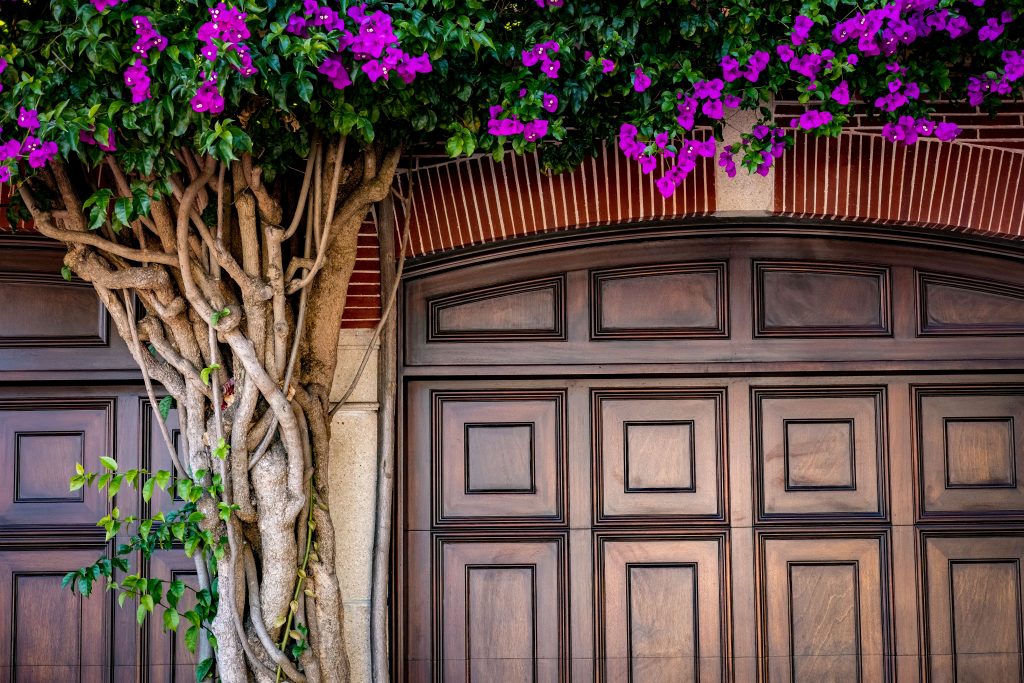
How Much Value Does a New Garage Door Add to Your Home? (2026 ROI Guide)

If you’re looking for one of the smartest ways to improve your home’s appearance while increasing its value, a new garage door should be at the top of your list.

Many homeowners think of kitchen remodels or bathroom renovations first, but year after year, garage door replacement ranks among the highest-return home improvement projects. A beautiful new garage door doesn’t just make your home look newer—it improves curb appeal, enhances security, increases energy efficiency, and leaves a lasting first impression on potential buyers.

Whether you’re planning to sell your home soon or simply want to invest in your property, here’s why replacing your garage door is one of the best upgrades you can make in 2026.


📈 Why Garage Doors Offer One of the Best Returns on Investment

Real estate professionals have long recognized the impact a garage door has on a home’s overall appearance.

Since the garage door often makes up 20–30% of your home’s front exterior, it’s one of the first things buyers notice when they pull into the driveway.

Industry reports consistently show that garage door replacement is among the top remodeling projects for return on investment, often allowing homeowners to recover 90–95% (or more) of the project’s cost depending on the home and local market.

Unlike many renovations that are hidden inside the home, a garage door creates an immediate visual impact that buyers notice within seconds.


🏡 First Impressions Matter

You’ve probably heard the saying:

“You never get a second chance to make a first impression.”

That couldn’t be more true in real estate.

Imagine two nearly identical homes:

Home A

  • Faded garage door
  • Rust spots
  • Dented panels
  • Loud operation

Home B

  • Modern insulated garage door
  • Fresh contemporary finish
  • Quiet operation
  • Stylish windows and hardware

Which one feels newer?

Which one feels better maintained?

Which one would you expect to command a higher selling price?

Most buyers make assumptions about the condition of an entire home based on its exterior—and your garage door plays a huge role in that perception.


🎨 Modern Garage Doors Instantly Improve Curb Appeal

Today’s garage doors offer far more than basic raised panels.

Popular 2026 trends include:

  • Modern flush-panel doors
  • Faux wood finishes
  • Matte black designs
  • Contemporary glass panels
  • Vertical and horizontal window layouts
  • Coastal-inspired colors
  • Custom decorative hardware

A garage door upgrade can completely transform the look of your home without requiring a major remodel.


🌡️ Energy Efficiency Adds Long-Term Value

Today’s insulated garage doors do much more than improve appearance.

They also help:

  • Reduce heat transfer
  • Keep attached garages more comfortable
  • Lower HVAC strain
  • Reduce outside noise
  • Strengthen the overall door structure

For San Diego homeowners, insulated doors help minimize summer heat entering the garage while creating a more comfortable space for storage, home gyms, or workshops.

Many buyers now actively look for energy-efficient upgrades, making insulated garage doors an attractive selling feature.


🔐 Security Is More Important Than Ever

Your garage is one of the largest entry points into your home.

Modern garage doors include significant security improvements, including:

  • Rolling-code technology
  • Smart phone control
  • Vacation lock mode
  • Reinforced steel construction
  • Tamper-resistant hardware
  • Battery backup systems

These features provide peace of mind for current homeowners while increasing appeal for future buyers.


📱 Smart Garage Technology Is Becoming the Standard

Smart home technology continues to influence buying decisions.

Modern garage door openers allow homeowners to:

  • Open and close the door remotely
  • Receive alerts if the door is left open
  • Monitor activity from anywhere
  • Grant temporary access to family or delivery drivers
  • Integrate with Amazon Alexa, Google Home, and other smart home systems

Adding a smart opener is one of the most affordable ways to modernize your home.


🔇 Quiet Operation Makes a Big Difference

Older garage doors often become noisy over time.

Grinding.

Rattling.

Shaking.

Squeaking.

These sounds can make the entire home feel older.

Upgrading to:

  • Nylon ball-bearing rollers
  • Belt-drive openers
  • High-cycle springs
  • Modern hinges

creates noticeably smoother and quieter operation.

It’s a small detail that buyers—and homeowners—appreciate every single day.


💰 Repairing an Old Door vs. Investing in a New One

Sometimes repairing your current garage door makes perfect sense.

However, if your door has:

  • Multiple dents
  • Rust or corrosion
  • Rotting wood
  • Outdated appearance
  • Frequent repairs
  • Poor insulation
  • Aging opener

…continuing to invest in repairs may cost more over time than upgrading.

A new garage door offers:

  • Improved reliability
  • Better warranties
  • Lower maintenance
  • Modern safety features
  • Higher resale value

🌴 Choosing the Right Garage Door for San Diego

Not every garage door performs equally in Southern California.

When selecting a new door, consider:

Coastal Homes

Choose:

  • Corrosion-resistant hardware
  • Aluminum or galvanized steel
  • Composite overlays
  • UV-resistant finishes

Inland Homes

Insulated steel doors provide excellent durability while helping reduce heat gain during the summer.

Style Matters

Popular choices include:

  • Contemporary flush panels
  • Wood-look steel doors
  • Carriage-house designs
  • Full-view glass garage doors

The best option depends on your home’s architecture and your long-term goals.


⭐ Why Professional Installation Matters

Even the best garage door won’t perform properly if it’s installed incorrectly.

Professional installation ensures:

  • Proper spring sizing
  • Correct balance
  • Safe operation
  • Weather sealing
  • Warranty protection
  • Smooth, quiet performance

An improperly installed garage door can lead to premature wear, safety concerns, and costly repairs.


🏠 Why San Diego Homeowners Choose Good Guys Garage Doors

At Good Guys Garage Doors, we help homeowners throughout San Diego choose garage doors that maximize both beauty and value.

Our team provides:

  • Free design consultations
  • Premium garage door brands
  • Professional installation
  • Smart opener upgrades
  • Energy-efficient insulated doors
  • Honest recommendations with upfront pricing

Whether you’re preparing to sell your home or planning to enjoy it for years to come, we’ll help you find the perfect garage door for your needs and budget.

📞 Call (866) 534-5324

🌐 Visit us at www.callgoodguys.com

Proudly serving homeowners throughout San Diego County.


✅ Final Thoughts

A garage door replacement is one of the few home improvement projects that delivers immediate visual impact, everyday convenience, improved security, and long-term value.

Whether your goal is to increase resale value, modernize your home’s appearance, or simply enjoy a quieter and more reliable garage door, investing in a quality replacement is a decision that continues to pay off.

If you’ve been considering an upgrade, there’s never been a better time to explore today’s modern garage door options.


What That Garage Door Noise Actually Means: A Complete Homeowner’s Guide

If your garage door has started making strange noises, don’t ignore it. While some sounds are harmless, others can be early warning signs of worn parts, safety issues, or an impending breakdown.

Your garage door opens and closes more than 1,500 times every year, and every moving component—from the springs and rollers to the opener and tracks—experiences wear over time. Those unusual sounds are often your garage door’s way of telling you something needs attention.

At Good Guys Garage Doors, we’ve diagnosed thousands of noisy garage doors throughout San Diego County. In this guide, we’ll explain what the most common garage door noises mean, what causes them, and when it’s time to call a professional.


🔊 1. Squeaking or Squealing

What it usually means:

Squeaking is one of the most common garage door complaints and is usually caused by:

  • Dry rollers
  • Dry hinges
  • Dry springs
  • Lack of lubrication

As metal parts move against one another without proper lubrication, friction creates that familiar squeak.

Can you fix it?

Usually, yes.

Apply a garage door lubricant (silicone or lithium-based) to:

  • Hinges
  • Roller bearings
  • Torsion springs
  • Bearing plates

Avoid using WD-40. While many homeowners reach for it first, WD-40 is primarily a cleaner and water displacer—not a long-lasting lubricant.

When to call a professional

If lubrication doesn’t eliminate the noise, the rollers or hinges may be worn and need replacement.


⚙️ 2. Grinding Noise

A grinding garage door is never something to ignore.

Grinding usually indicates metal components are wearing against each other.

Common causes include:

  • Worn rollers
  • Damaged bearings
  • Bent tracks
  • Opener gear wear
  • Failing motor

If left alone, grinding can quickly lead to:

  • Damaged tracks
  • Burned-out opener motors
  • Roller failure

Warning Signs

  • Rough movement
  • Door shaking
  • Jerking during travel
  • Metal shavings around tracks

Grinding noises deserve a professional inspection sooner rather than later.


💥 3. Loud Banging

A sudden loud bang often scares homeowners.

Many people think someone hit the garage…

In reality, it’s frequently a broken torsion spring.

When a spring snaps, all of its stored energy releases instantly.

Other possible causes:

  • Loose panels
  • Broken hinges
  • Cable failure

What to do immediately

If you hear a loud bang and your garage door won’t open normally:

✅ Stop using the door.

A broken spring can make your garage door weigh several hundred pounds.

Attempting to operate it can damage your opener and create a serious safety hazard.


📣 4. Rattling

Rattling is usually good news because it’s often an easy fix.

It generally comes from:

  • Loose bolts
  • Loose hinges
  • Loose track brackets
  • Vibrating opener mounts

Garage doors naturally vibrate every time they operate.

Over thousands of cycles, hardware slowly loosens.

Solution

A technician can:

  • Tighten all hardware
  • Check track mounting
  • Inspect hinges
  • Verify panel integrity

Many rattles disappear after a professional tune-up.


📍 5. Popping or Cracking Sounds

Popping noises often occur when:

  • Springs twist under load
  • Panels flex
  • Hardware shifts
  • Door sections expand or contract

Occasional popping isn’t unusual.

However…

Repeated loud popping could indicate:

  • Worn torsion springs
  • Door balance problems
  • Hinges under excessive stress

If popping becomes louder over time, schedule an inspection before a spring fails.


🚪 6. Clicking

A clicking opener usually points toward an electrical issue.

Possible causes include:

  • Remote programming problems
  • Safety sensor interruption
  • Circuit board malfunction
  • Relay failure

If you hear clicking but nothing happens, your opener may be attempting to activate without receiving the proper signal.

Modern openers may also flash lights or display diagnostic codes.


🔄 7. Humming But Not Moving

This is another common service call.

You press the remote…

The opener hums…

But the door doesn’t move.

Usually caused by:

  • Broken spring
  • Stripped drive gear
  • Locked trolley
  • Seized rollers

If the opener hums continuously, stop trying to operate it.

Repeated attempts can burn out the motor.


📢 8. Screeching Metal Sounds

High-pitched screeching is usually caused by:

  • Steel rollers
  • Dry bearings
  • Bent tracks
  • Damaged pulleys

The longer this continues, the faster components wear.

Many homeowners are surprised how much quieter their garage door becomes after upgrading to premium nylon ball-bearing rollers.


🏠 9. Vibrating or Shaking

If the entire garage shakes while the door moves, it usually indicates:

  • Loose opener mounting
  • Worn rollers
  • Unbalanced springs
  • Track alignment issues

Ignoring vibrations can eventually lead to:

  • Panel cracking
  • Track damage
  • Premature opener failure

🔍 What Your Garage Door Should Sound Like

A healthy garage door should:

✅ Move smoothly

✅ Sound consistent

✅ Avoid jerking

✅ Open without excessive vibration

Modern insulated doors paired with nylon rollers and belt-drive openers are surprisingly quiet.

If your door suddenly starts making new noises, it’s trying to tell you something.


Prevent Noisy Garage Doors with Annual Maintenance

Most noise problems are preventable.

Professional maintenance includes:

  • Lubricating moving parts
  • Tightening hardware
  • Inspecting springs
  • Checking rollers
  • Testing door balance
  • Aligning tracks
  • Adjusting opener settings

Many customers are amazed that a one-hour tune-up makes their garage door feel almost brand new.


Why San Diego Homeowners Trust Good Guys Garage Doors

At Good Guys Garage Doors, we don’t just fix noisy garage doors—we find the underlying cause.

Our technicians perform a complete inspection to identify worn components before they fail.

We proudly offer:

  • Same-day repairs
  • Professional garage door tune-ups
  • Premium nylon roller upgrades
  • Spring replacement
  • Opener repair
  • Track alignment
  • Honest recommendations with upfront pricing

Whether your garage door squeaks, grinds, rattles, or bangs, we’ll restore smooth, quiet operation.

📞 Call (866) 534-5324
Or schedule online at www.callgoodguys.com

Serving homeowners throughout San Diego County.

5 Signs Your Garage Door Spring Needs Emergency Repair in San Diego

That grinding noise at 7 a.m. isn’t just your imagination here’s how to know when your garage door spring is about to fail, and what to do before it does.

Your garage door spring does most of the heavy lifting – literally. It counterbalances a door that can weigh anywhere from 130 to 400 pounds, absorbing thousands of cycles of tension every year. When it starts to fail, it doesn’t just become an inconvenience. It can become dangerous. Here are five signs San Diego homeowners should never ignore.

Safety First: A broken garage door spring is one of the most dangerous DIY repairs you can attempt. Springs are under extreme tension and can cause serious injury if mishandled. If you suspect a spring has snapped, do not attempt to open the door manually. Call a licensed technician immediately.

The 5 Warning Signs

1. Your Garage Door Is Unusually Heavy to Lift

Most garage doors should feel nearly weightless when lifted manually that’s the spring doing its job. If yours feels like you’re lifting a car hood against gravity, the spring has likely lost tension or broken entirely. In San Diego, coastal salt air accelerates metal fatigue, which means torsion springs near the beach in areas like Ocean Beach or Pacific Beach can wear out faster than you’d expect.

2. The Door Opens Unevenly or Tilts to One Side

Most residential garage doors use two torsion or extension springs. If one breaks and the other doesn’t, you’ll notice the door rising crookedly one side higher than the other. This uneven movement puts stress on cables and rollers too, turning a spring problem into a much more expensive repair if left unaddressed. A lopsided door is a clear signal to stop using it immediately.

3. You Hear a Loud Bang From the Garage

A torsion spring failure sounds like a firecracker or a gunshot going off inside your garage. Homeowners often mistake it for a break-in or a fallen shelf. If you hear a sudden loud bang and your door stops working correctly afterward, a broken spring is almost certainly the cause. This is one of the most urgent signs the door should not be operated under any circumstances until the spring is replaced.

4. Visible Gaps or Rust on the Spring Coils

Take a look at your torsion spring the horizontal bar mounted above the door. A healthy spring looks like a tight, uniform coil. A failing one may show a visible 2-3 inch gap in the coil where it has snapped, or heavy rust and corrosion along the metal. San Diego’s marine layer and humidity make this especially common in homes closer to the coastline. Rust weakens the metal significantly and can dramatically reduce a spring’s expected lifespan.

5. The Door Reverses, Stops, or Won’t Stay Open

Modern garage door openers have built-in sensors that detect excessive resistance and a failing spring creates exactly that. If your door goes up a few inches and reverses, or opens partway and then falls back down, your opener isn’t malfunctioning. It’s detecting that something is wrong with the spring. Similarly, if the door won’t stay open on its own without the opener holding it, spring tension is gone.


How Long Do Garage Door Springs Last in San Diego?

Standard torsion springs are rated for about 10,000 cycles roughly 7 to 9 years if you open and close your garage door 3-4 times per day. In San Diego, that lifespan can shorten due to a few local factors:

Salt air corrosion. Homes within a few miles of the coast Encinitas, Del Mar, Mission Beach, Coronado are exposed to salt-laden air year-round. This accelerates rust formation on springs, cables, and rollers, often cutting their expected life by 20-30%.

Heat fluctuations in inland areas. Communities like El Cajon, Santee, and Lakeside experience more dramatic temperature swings than coastal neighborhoods. Repeated expansion and contraction of metal can fatigue springs more quickly over time.

Lack of lubrication. Springs need to be lubricated with a garage door-specific lubricant (not WD-40) every six months. Skipping this routine maintenance is the single most preventable cause of premature spring failure.

Pro Tip: If one spring breaks, strongly consider replacing both at the same time even if the second one looks fine. Springs are sold and installed in matched pairs, and if one has failed, the other is likely near the end of its life too. Replacing both now saves you a second service call in six months.

What to Do If You Suspect a Broken Spring

First: do not try to open the door. Forcing a door with a broken spring puts extreme strain on the opener motor and can damage cables, drums, and the opener itself — often tripling the repair cost.

Second, disengage the opener using the red emergency release cord hanging from the trolley track. This disconnects the door from the motor so nothing further is damaged if the door shifts unexpectedly.

Third, call a licensed San Diego garage door technician. Spring replacement is one of the most common garage door repairs, and a professional can typically complete it same-day. Most reputable companies offer emergency service for urgent situations.


Frequently Asked Questions

How much does garage door spring repair cost in San Diego?

Spring replacement typically costs between $400 and $700 for a standard residential door, depending on spring type (torsion vs. extension), door size, and whether one or both springs are being replaced. Emergency or after-hours service may carry an additional fee.

Can I replace a garage door spring myself?

Technically yes, but it’s strongly discouraged. Torsion springs are under hundreds of pounds of torque. Improper handling has resulted in serious injuries and fatalities. Most professional technicians spend years learning proper spring winding techniques. The cost of professional repair is far less than an ER visit.

How do I know if I have torsion or extension springs?

Torsion springs are mounted horizontally above the door on a metal bar. Extension springs run horizontally along the upper tracks on either side of the door. Torsion springs are more common in newer homes and generally last longer. Both can break suddenly and should only be replaced by a professional.

What if my garage door opener still works but the door barely moves?

This almost always points to a broken spring. The opener motor is running, but without spring tension to counterbalance the door’s weight, it can’t do the job alone. Turn off the opener immediately to prevent motor burnout, and call a technician.

Does homeowner’s insurance cover a broken garage door spring?

Generally, no. Standard homeowner’s insurance policies cover sudden and accidental damage (like storm damage or a car impact) but not normal wear and tear which is what spring failure typically falls under. Some home warranty plans do cover garage door spring repairs, so check your policy.


Have a broken spring or hear something off with your garage door? Our licensed technicians serve all of San Diego County from Chula Vista to Oceanside and are available for same-day emergency service. Call us now or request a free estimate.

Is Your Garage Door Safe? 7 Hidden Safety Risks Most Homeowners Miss

Your garage door is the largest moving object in your home, yet most homeowners rarely think about its safety until something goes wrong.

A typical garage door weighs between 150 and 400 pounds, and when something fails — springs, cables, sensors, or tracks — it can quickly become dangerous. Every year thousands of injuries occur due to faulty or poorly maintained garage door systems.

At Good Guys Garage Doors, we frequently discover safety issues during inspections that homeowners had no idea existed.

In this guide, we’ll cover 7 hidden garage door safety risks many homeowners miss, how to spot them early, and what you can do to keep your family and home protected.


🚨 1. Worn or Failing Garage Door Springs

Garage door springs are responsible for lifting and lowering the entire weight of the door. These springs operate under extreme tension, and when they wear out or break, the results can be dangerous.

Warning Signs:

  • The door feels heavy when opening manually
  • The door stops halfway
  • You hear a loud bang in the garage
  • The opener struggles or shakes

A broken spring can cause the door to slam shut unexpectedly, potentially damaging vehicles or injuring someone underneath.

⚠️ Important: Spring repair should always be handled by trained professionals.


⚠️ 2. Frayed or Damaged Lift Cables

Garage door cables work together with springs to safely lift and lower the door.

Over time, cables can become:

  • Frayed
  • Rusted
  • Stretched
  • Partially broken

If a cable snaps, the door can drop suddenly or become crooked, putting stress on other parts of the system.

What to Watch For:

  • Loose cables hanging from the sides
  • Uneven door movement
  • Visible fraying or rust

Cable issues are a serious safety hazard and should be addressed immediately.


🔍 3. Misaligned or Dirty Safety Sensors

Since the early 1990s, garage doors have been required to include photo-eye safety sensors near the bottom of the tracks.

These sensors prevent the door from closing if something is in the doorway.

However, sensors can easily become:

  • Knocked out of alignment
  • Covered in dirt or spider webs
  • Blocked by objects

When sensors malfunction, the door may close when it shouldn’t — or fail to close properly.

Quick Test:

Place an object like a box in the doorway while closing the door. If the door doesn’t reverse immediately, the sensors may not be working properly.


⚙️ 4. Loose or Worn Hardware

A garage door typically opens and closes 1,000–1,500 times per year, which slowly loosens hardware.

Over time you may see:

  • Loose bolts
  • Worn hinges
  • Vibrating brackets
  • Weak roller mounts

This can cause:

  • Loud noises
  • Shaking doors
  • Track damage
  • Panel cracking

Left unchecked, loose hardware can eventually lead to a door coming off track.


🛞 5. Worn Rollers That Can Cause Door Failure

Garage door rollers help the door glide smoothly along its tracks.

Cheap rollers or worn-out rollers can cause:

  • Grinding noises
  • Jerky movement
  • Increased friction on the opener

Eventually, damaged rollers can cause the door to bind or jump off track, creating a major safety issue.

High-quality nylon ball-bearing rollers last longer and operate much quieter.


🚪 6. Garage Doors That Are Out of Balance

A properly functioning garage door should feel light and easy to lift manually.

If your door is out of balance, the opener has to do all the work — which can lead to:

  • Opener motor burnout
  • Cable damage
  • Sudden door drops

Simple Balance Test:

  1. Disconnect the opener using the red emergency release cord.
  2. Lift the door halfway.

If the door:

  • Drops quickly
  • Rises on its own
  • Won’t stay in place

Your springs may need adjustment or replacement.


🔌 7. Old or Failing Garage Door Openers

Older garage door openers may lack important modern safety features.

Openers manufactured before 1993 often do not include automatic reversing systems.

Even newer openers can develop issues such as:

  • Faulty circuit boards
  • Worn gears
  • Weak motors

Signs your opener may be unsafe include:

  • Delayed response
  • Loud grinding noises
  • Door reversing unexpectedly

Upgrading to a modern opener provides better security, smoother operation, and smart features like smartphone control.


🧰 The Importance of Regular Garage Door Safety Inspections

Most garage door problems develop gradually, which means they can often be detected before becoming dangerous.

A professional garage door safety inspection includes:

✔ Spring tension testing
✔ Cable condition check
✔ Roller inspection
✔ Track alignment
✔ Sensor calibration
✔ Hardware tightening
✔ Opener safety testing

These inspections can identify potential hazards early and help extend the lifespan of your garage door system.


🏠 Why San Diego Homeowners Trust Good Guys Garage Doors

At Good Guys Garage Doors, safety is always our top priority.

We provide homeowners across San Diego with:

  • Same-day garage door service
  • Comprehensive safety inspections
  • High-quality replacement parts
  • Honest recommendations
  • Professional technicians you can trust

Whether your garage door needs a quick adjustment or a major repair, we’re here to make sure it operates safely and reliably.

📞 Call (866) 534-5324
Or visit www.callgoodguys.com
Serving homeowners throughout San Diego County.


✅ Final Thoughts

Your garage door may seem simple, but it’s a powerful mechanical system that requires proper care and maintenance.

By recognizing these hidden safety risks early, you can prevent accidents, protect your home, and avoid costly repairs.

If you haven’t had your garage door inspected recently, now is the perfect time to make sure everything is operating safely.

Why Your Garage Door Won’t Close All the Way (Top 8 Causes & Fixes)

There’s nothing more frustrating than pressing your garage door remote… watching the door start to close… and then suddenly stop — or worse — reverse back up.

If your garage door won’t close all the way, you’re not alone. This is one of the most common service calls we receive at Good Guys Garage Doors in San Diego.

The good news? Many causes are simple.
The bad news? Ignoring it can lead to bigger (and more expensive) problems.

Here are the top 8 reasons your garage door won’t close — and what you should do about it.


🚨 1. Misaligned or Blocked Safety Sensors (Most Common Cause)

Modern garage doors have photo-eye safety sensors near the bottom of the tracks. These sensors prevent the door from closing if something is in the way.

If they’re:

  • Dirty
  • Slightly bumped
  • Misaligned
  • Blocked by debris

Your garage door will reverse automatically.

How to Fix It:

  • Check for objects blocking the doorway
  • Wipe both sensor lenses with a microfiber cloth
  • Make sure both sensor lights are solid (not blinking)
  • Gently adjust alignment until the lights stop flickering

If the lights won’t stay solid, you may have a wiring issue.


⚙️ 2. Travel Limit Settings Are Incorrect

Your garage door opener has travel limits that tell it how far to move.

If the close limit is set incorrectly, the opener may think it has hit the floor before it actually has — causing it to reverse.

Signs:

  • Door closes almost fully, then pops back up
  • No sensor blinking

Fix:

Adjust the close limit screw on the opener (refer to your opener manual). Small adjustments go a long way.

If unsure, it’s safer to have a professional calibrate it.


🔧 3. Force Settings Need Adjustment

Garage door openers have force sensitivity settings. If the opener detects resistance while closing, it reverses as a safety measure.

If the closing force is too low, normal friction can trigger reversal.

Causes:

  • Cold weather
  • Dry rollers
  • Minor track friction

Fix:

  • Lubricate rollers and hinges
  • Adjust closing force slightly

⚠️ Do not over-adjust force — too much force defeats safety features.


🛞 4. Something Is Blocking the Tracks

Small debris like:

  • Rocks
  • Leaves
  • Built-up dirt
  • Bent metal

Can prevent smooth movement.

Fix:

  • Inspect tracks for debris
  • Clean with a dry cloth
  • Ensure tracks are not bent or misaligned

If tracks are visibly bent, do not attempt to bend them back yourself — this can cause worse damage.


💥 5. The Door Is Off Track

If one side of your garage door is slightly higher than the other, or it looks crooked while moving, it may be partially off track.

Warning Signs:

  • Grinding noise
  • Door shaking
  • Uneven closing
  • Gap on one side

This is a serious issue. Continuing to operate the door can cause:

  • Cable failure
  • Panel damage
  • Complete derailment

👉 Stop using the door and call for service immediately.


🔋 6. Opener Battery Backup Issue

If your opener is running on backup battery mode, it may close slower or behave differently.

Some models beep or flash lights when operating on battery power.

Fix:

  • Check if your home recently had a power interruption
  • Replace backup battery if older than 3–4 years

⚖️ 7. Broken or Weak Garage Door Springs

Springs do the heavy lifting. If a spring is broken or losing tension, the door may struggle to close properly.

Signs of Spring Problems:

  • Loud bang previously heard
  • Door feels heavy
  • Door stops halfway
  • Cables look loose

A broken spring can cause the opener to misinterpret weight and reverse.

⚠️ Never attempt spring repair yourself — springs are under extreme tension.


🔌 8. Wiring or Circuit Board Problems

If none of the above fixes solve the issue, your opener’s internal wiring or logic board may be failing.

Common with:

  • Older openers (10+ years)
  • Units exposed to moisture
  • Power surge damage

This usually requires professional diagnosis and possibly opener replacement.


🚨 When Should You Call a Professional?

Call for service immediately if:

✔ The door is crooked or off track
✔ You hear grinding or snapping
✔ The door slams or jerks
✔ Springs appear broken
✔ The opener strains loudly
✔ Adjustments don’t fix the problem

Garage doors weigh hundreds of pounds — improper repairs can cause injury or serious property damage.


💰 The Cost of Ignoring the Problem

A garage door that won’t close properly can lead to:

  • Opener motor burnout
  • Panel damage
  • Cable failure
  • Security risks
  • Emergency service fees

A simple sensor fix today can prevent a $600–$1,200+ repair later.


🏠 Why San Diego Homeowners Trust Good Guys Garage Doors

At Good Guys Garage Doors, we specialize in diagnosing garage door closing issues quickly and correctly.

We provide:

  • Same-day service across San Diego
  • 25-point safety inspections
  • Spring and cable repairs
  • Sensor calibration
  • Track realignment
  • Honest recommendations
  • Transparent pricing

Whether it’s a quick adjustment or a full repair, we’ll get your door closing safely and smoothly again.

📞 Call (866) 534-5324
Or schedule online at www.callgoodguys.com
Serving homeowners throughout San Diego County.


✅ Final Thoughts

If your garage door won’t close all the way, don’t ignore it. What seems like a small annoyance can turn into a major repair — or a safety hazard.

Most causes are simple, but some require expert repair. The key is identifying the issue early and acting quickly.

Need help today? We’re ready when you are.

Top Garage Door Upgrades That Increase Home Value in 2026

If you’re looking for one of the smartest ways to boost curb appeal and increase your home’s value in 2026, upgrading your garage door should be at the top of your list.

Many homeowners don’t realize that a garage door can make up nearly 30% of a home’s front exterior, making it one of the most noticeable features from the street. According to industry reports, a new garage door consistently ranks among the highest ROI home improvements, often recouping up to 90–95% of the investment when selling.

At Good Guys Garage Doors, we help San Diego homeowners choose upgrades that not only look amazing but also improve security, efficiency, and long-term durability.

Here are the top garage door upgrades that add the most value in 2026 — and why they’re worth considering.


🚪 1. Modern Steel & Faux-Wood Garage Doors

One of the biggest trends heading into 2026 is the rise of modern steel doors with realistic wood-grain finishes. These doors give homeowners the warmth and luxury look of wood without the high maintenance.

Why it adds value:

  • Instantly upgrades curb appeal
  • Works with modern and coastal architecture
  • Durable against sun exposure and humidity
  • Lower maintenance than real wood

Popular finishes include walnut, espresso, and driftwood tones — perfect for San Diego homes.

Value tip: Buyers love the appearance of wood doors, but prefer the durability of steel.


🌡️ 2. Insulated Garage Doors for Energy Efficiency

Energy efficiency is a huge selling point for buyers in 2026. Insulated garage doors help regulate temperature, especially in attached garages.

Benefits include:

  • Reduced heat transfer into the home
  • Lower energy bills
  • Quieter operation
  • Stronger panel construction

Even in San Diego’s mild climate, insulated doors prevent excess heat buildup during sunny months and improve comfort year-round.

Why buyers care:
Energy-efficient upgrades are one of the fastest ways to increase perceived home value.


📱 3. Smart Garage Door Openers & Wi-Fi Control

Smart home technology continues to drive buyer demand. Upgrading to a Wi-Fi-enabled garage door opener is a relatively small investment that adds major appeal.

Features include:

  • Control your garage door from your phone
  • Real-time open/close alerts
  • Automatic closing timers
  • Integration with Alexa, Google Home, or Ring systems

Homebuyers increasingly expect smart features — and garage access is one of the most important.

Pro tip: Smart openers also improve security by preventing unauthorized access.


🔇 4. Quiet Belt-Drive or Wall-Mount Openers

Noise reduction is a huge selling point, especially in homes with living spaces above or next to the garage.

Modern opener upgrades include:

  • Belt-drive systems (quieter than chain drives)
  • Jackshaft/wall-mount openers that eliminate ceiling vibration
  • Soft start/stop technology for smoother operation

A quiet garage door gives your home a more premium feel — something buyers notice immediately during showings.


🎨 5. Updated Colors & Contemporary Finishes

White garage doors used to be standard — but 2026 design trends lean toward bold, modern tones.

Trending colors:

  • Matte black
  • Charcoal gray
  • Deep bronze
  • Natural wood-tone finishes

These colors complement:

  • Black window frames
  • Modern stucco homes
  • Coastal architecture common across San Diego

A fresh color alone can dramatically improve your home’s appearance without a full exterior renovation.


🪟 6. Window Inserts for Natural Light & Style

Adding windows to your garage door is one of the easiest ways to upgrade the look of your home.

Benefits include:

  • Increased natural light inside the garage
  • Improved exterior symmetry
  • Enhanced architectural detail

Popular styles in 2026:

  • Horizontal modern windows
  • Frosted privacy glass
  • Black-frame window panels

Windows give a custom look that stands out from standard builder-grade doors.


🔒 7. Reinforced Security Features

Security upgrades aren’t just about safety — they also boost home value.

Modern garage door security features include:

  • Rolling-code technology
  • Auto-lock systems
  • Reinforced steel panels
  • Tamper-resistant tracks

Homebuyers increasingly look for secure entry points, and the garage is one of the largest access areas.


🧰 8. High-Cycle Springs & Premium Hardware

Not all upgrades are visible — but buyers and inspectors notice performance.

Upgrading to:

  • High-cycle torsion springs
  • Nylon ball-bearing rollers
  • Heavy-duty hinges

Provides:

  • Longer lifespan
  • Smoother operation
  • Reduced future maintenance costs

These upgrades signal a well-maintained, high-quality home system.


💡 9. LED Lighting & Motion Sensors

Integrated LED lighting is a small detail that makes a big difference.

Benefits include:

  • Better visibility at night
  • Improved safety
  • Modern appearance

Motion-activated lighting also enhances security and adds a smart-home feel buyers appreciate.


🏠 Why Garage Door Upgrades Offer Such a High ROI

Unlike many home upgrades that are hidden inside walls, a garage door upgrade is instantly visible.

A modern door:

  • Makes your home look newer
  • Increases perceived value
  • Improves functionality every day
  • Reduces future maintenance costs

In competitive real estate markets like San Diego, curb appeal can make the difference between a quick sale and a home sitting on the market.


⭐ Why San Diego Homeowners Choose Good Guys Garage Doors

At Good Guys Garage Doors, we specialize in helping homeowners choose upgrades that combine style, durability, and long-term value.

We provide:

  • Free design consultations
  • Expert installation
  • Premium parts and hardware
  • Honest recommendations tailored to your home

Whether you’re planning to sell or just want to modernize your home, we’ll help you choose upgrades that make the biggest impact.

📞 Call (866) 534-5324
Or visit www.callgoodguys.com
Serving San Diego County with same-day service.


✅ Final Thoughts

If you want to increase your home’s value in 2026, upgrading your garage door is one of the smartest investments you can make.

From modern designs and insulation to smart technology and security features, today’s upgrades offer more than just good looks — they improve efficiency, safety, and everyday convenience.

A well-chosen garage door upgrade doesn’t just transform your home — it pays you back when it matters most.

Why Garage Door Breakdowns Happen More in Winter (Even in San Diego)

When most people think about winter-related garage door problems, they imagine snow, ice, and freezing temperatures. Since San Diego doesn’t deal with harsh winters, many homeowners assume their garage door is immune to seasonal issues.

Unfortunately, that’s not true.

Even in San Diego’s mild winter climate, garage door breakdowns spike during the winter months. At Good Guys Garage Doors, we consistently see an increase in service calls between December and February — and the reasons often surprise homeowners.

In this article, we’ll explain why garage doors fail more often in winter, what problems to watch for, and how to prevent costly breakdowns before they happen.


🌡️ 1. Temperature Changes Affect Metal Components

While San Diego winters are mild, the temperature swings between daytime and nighttime can still be significant. These fluctuations cause metal parts to expand during the day and contract at night.

Over time, this leads to:

  • Loose bolts and brackets
  • Track misalignment
  • Increased friction between moving parts
  • Noisy or jerky operation

Springs, hinges, rollers, and tracks are all made of metal — and even small alignment changes can throw the entire system off.

Why this causes breakdowns:
When components fall slightly out of alignment, the opener has to work harder. That extra strain accelerates wear on the motor, gears, and drive system — eventually causing failure.


⚙️ 2. Garage Door Springs Are Under More Stress in Winter

Garage door springs do the heavy lifting. Even in San Diego, cooler winter air makes metal less flexible, which increases tension on springs.

During winter months, springs:

  • Become more brittle
  • Lose elasticity faster
  • Are more likely to snap when already worn

This is why broken garage door springs are one of the most common winter service calls we receive.

Warning signs of spring trouble include:

  • A loud bang from the garage
  • The door opening only a few inches
  • The door feeling unusually heavy
  • The opener struggling or stopping

If a spring breaks, stop using the door immediately — operating it can damage the opener or cause the door to fall unexpectedly.


🔊 3. Lack of Lubrication Becomes a Bigger Problem

Lubrication is critical for smooth garage door operation. In winter, lubricants can thicken or dry out, especially if the door hasn’t been serviced recently.

This causes:

  • Increased friction
  • Squeaking or grinding noises
  • Slower door movement
  • Added strain on the opener

Many homeowners forget to lubricate their garage door during cooler months — which is when it’s needed most.

Pro tip:
Use a garage-door-specific silicone or lithium lubricant, not WD-40, and lubricate:

  • Rollers
  • Hinges
  • Springs
  • Bearings

🚪 4. Increased Winter Usage Accelerates Wear

During winter, families tend to:

  • Drive more and walk less
  • Use the garage as the main entry point
  • Open and close the door more frequently

More cycles = more wear.

If your door is already overdue for maintenance, increased winter use can push worn components past their breaking point.

This often leads to:

  • Roller failure
  • Cable fraying
  • Opener burnout
  • Door balance issues

🔋 5. Backup Batteries and Openers Fail More Often

Many modern garage door openers include battery backup systems, which are essential during power outages — but winter is when these batteries most often fail.

Cold temperatures shorten battery life, and most backup batteries only last 2–4 years.

Signs of battery-related issues:

  • Opener beeping every few minutes
  • Slower door operation
  • Intermittent failure to open or close

Ignoring battery warnings can leave you locked out when you need access most.


🌧️ 6. Moisture and Coastal Humidity Cause Corrosion

Even without rainstorms, winter brings higher humidity to San Diego — especially near the coast.

Moisture leads to:

  • Rust on springs, cables, and hinges
  • Corrosion inside rollers and bearings
  • Stiff movement and grinding noises

Salt air accelerates this process, which is why coastal homes experience faster winter wear than inland properties.

Regular cleaning and lubrication are essential to prevent corrosion-related failures.


⚠️ 7. Small Problems Are Ignored Longer in Winter

Shorter days, busy schedules, and holiday distractions cause many homeowners to delay repairs during winter.

Unfortunately, garage door problems don’t pause — they compound.

What starts as:

  • A small noise
  • A slow response
  • A slight vibration

Often becomes:

  • A snapped spring
  • A burnt-out opener
  • A door stuck halfway open

Winter is when delayed maintenance turns into emergency repairs.


🧰 How to Prevent Winter Garage Door Breakdowns

The good news? Most winter garage door failures are completely preventable.

A professional winter tune-up includes:

  • Spring balance testing
  • Hardware tightening
  • Track alignment
  • Roller and hinge inspection
  • Full lubrication
  • Opener force and limit calibration
  • Sensor testing

A tune-up typically takes under an hour and can save hundreds to thousands of dollars in repairs.


🏠 Why San Diego Homeowners Trust Good Guys Garage Doors

At Good Guys Garage Doors, we know San Diego’s climate — and how it affects garage doors year-round.

Homeowners choose us because we offer:

  • ✔ Same-day winter service
  • ✔ Honest, upfront pricing
  • ✔ 25-point inspections
  • ✔ High-quality, long-lasting parts
  • ✔ No-pressure recommendations
  • ✔ 5-star local reputation

Whether you’re hearing new noises, noticing slower operation, or just want peace of mind before something breaks, we’re here to help.

📞 Call (866) 534-5324
Or book online at www.callgoodguys.com
Proudly serving San Diego County


✅ Final Thoughts

Winter garage door breakdowns don’t require freezing temperatures — just wear, moisture, and neglect.

Even in San Diego, winter is the season when small issues finally surface. Addressing them early keeps your door safe, reliable, and running smoothly all year long.

Don’t wait for a breakdown. A quick inspection today can prevent a major repair tomorrow.

Why Your Garage Door Opener Keeps Beeping (and What to Do About It)

If your garage door opener has suddenly started beeping, you’re not alone. Modern garage door openers are designed with smart technology, battery backups, and safety alerts — and many of those features use beeping as a warning signal.

But here’s the good news: a beeping garage door opener is usually not an emergency. In most cases, the opener is trying to tell you exactly what the issue is — whether it’s a low battery, power outage backup mode, sensor misalignment, connectivity issue, or something else.

In this guide, the experts at Good Guys Garage Doors break down the most common reasons your garage door opener beeps, what each pattern means, and what you can do to fix it.


🔊 What Does the Beeping Sound Mean?

Garage door openers beep to communicate status alerts. The meaning depends on the model, but in general, beeping indicates one of the following:

Beep PatternLikely Cause
Slow, steady beepingBattery backup in use (power outage)
Beeping every 2–5 minutesBackup battery is low or failing
Continuous beeping during motionSafety warning (door operating in backup mode)
Repeating beep pattern when closingSafety sensor obstruction or error
Beeping with flashing lightsPhoto eye sensors misaligned

If your opener has a display panel, it may also show an error code that helps identify the issue.


⚡ 1. Your Opener Is Running on Battery Backup

This is the most common reason for a beeping garage door opener — especially in San Diego neighborhoods where power outages or grid fluctuations occur.

Most modern openers have backup batteries to allow operation even when the power goes out.

How to Know:

  • Opener light may flash
  • You see a solid or blinking battery icon
  • The opener runs slower and quieter than usual

What to Do:

  • Check if your home has power to outlets and lights
  • Wait for power to return
  • No further action needed unless the beeping continues after power is restored

If power is on but the opener is still in backup mode, the battery may need replacement.


🔋 2. Your Backup Battery Is Low or Needs Replacement

Backup batteries last an average of 2–4 years. Once they weaken, your opener will beep repeatedly.

Signs:

  • Beeping every few minutes
  • Display showing Low Battery / Replace Battery

How to Replace the Battery:

  1. Open the rear battery compartment on the opener.
  2. Remove the old battery.
  3. Insert a 12V, 5Ah sealed lead-acid battery (most LiftMaster/Chamberlain models).
  4. Close cover and reconnect.

If you’re unsure which battery your opener uses, Good Guys Garage Doors can replace it during a quick service visit.


🟡 3. Safety Sensors Are Blocked or Misaligned

Your opener may beep if the photo-eye safety sensors at the bottom of your garage door tracks become:

  • Dirty
  • Blocked
  • Knocked out of alignment

These sensors prevent the door from closing on people, pets, or vehicles.

How to Fix It:

  • Make sure nothing is blocking the doorway
  • Wipe sensors with a microfiber cloth
  • Ensure both sensor lights are solid, not blinking
  • If blinking, gently realign the sensors until the lights stop flickering

If sensors stay misaligned, the opener may refuse to close the door fully.


📶 4. Wi-Fi or Smart System Notifications

If your opener is a smart model (MyQ, LiftMaster, Chamberlain, Genie Aladdin Connect), the beeping could be triggered by:

  • Software update
  • Wi-Fi reconnection alert
  • Lost wireless signal

What to Do:

  • Check your Wi-Fi router connection
  • Reconnect through the manufacturer’s app
  • Update your opener firmware if prompted

If you recently changed your Wi-Fi network name or password, the opener will need to be reconnected manually.


🧰 5. Mechanical or Motor Issues

Less commonly, beeping may signal a motor strain or internal fault.

This could happen if:

  • The door is unbalanced
  • The springs are worn out
  • Rollers are damaged and causing resistance

Warning:

If the opener is straining to lift the door, stop using it — running a heavy door can burn out the opener motor.

This is a situation where you should call a professional.


🧠 How to Stop the Beeping Temporarily

If the beeping is driving you nuts and you need quiet right now, you can:

  • Unplug the opener
  • Disconnect battery backup (not recommended if the door is your primary entry)

This is only a temporary fix — you’ll still need to address the root issue.


🏡 Why You Shouldn’t Ignore a Beeping Garage Door Opener

A beeping opener is not just a nuisance — it’s a built-in safety and maintenance system. Ignoring it can lead to:

  • Unexpected failure when you need to leave home
  • Security risks if the door won’t fully close
  • Costly opener or spring damage if the door is heavy or unbalanced

The beeping is your opener’s way of protecting your home, equipment, and safety.


🏠 Why San Diego Homeowners Trust Good Guys Garage Doors

At Good Guys Garage Doors, we specialize in diagnosing and repairing garage door opener beeping issues of all brands and models. We offer:

  • 🧰 Same-day troubleshooting and repair
  • 🔋 Battery backup replacement
  • ⚙️ Sensor cleaning & realignment
  • 🔧 Spring & balance adjustments
  • 📶 Smart system reconnect and setup

Whether the issue is simple or complex, we’ll fix it quickly — and correctly.

📞 Call (866) 534-5324 or schedule online at www.callgoodguys.com
Serving all of San Diego County with fast, reliable garage door service.

Top 10 Garage Door Trends for 2025: Styles, Colors & Smart Features

Your garage door is one of the first things people notice when they see your home — and in 2025, homeowners are investing more than ever into making sure it looks modern, stylish, and functional. Whether you’re upgrading your current door or planning a full exterior refresh, today’s garage door designs offer better durability, improved energy efficiency, and smart technology that makes daily life easier.

Here are the Top 10 Garage Door Trends for 2025, curated by the experts at Good Guys Garage Doors, serving homeowners across San Diego County.


1. Modern, Clean Lines & Minimalist Designs

The sleek, contemporary look continues to dominate in 2025. Instead of raised or traditional carriage-style panels, many homeowners are choosing:

  • Flat, smooth panel garage doors
  • Flush, seamless designs
  • Horizontal line embossing
  • Matte or satin finishes

This style pairs perfectly with modern and remodeled homes, giving your exterior a clean, elevated look.


2. Faux-Wood Finishes That Look Like the Real Thing

Homeowners love the timeless look of wood — but not the maintenance. Fortunately, today’s composite and steel doors offer ultra-realistic woodgrain textures that are:

  • Moisture and rot resistant
  • UV and fade-resistant (important in San Diego sun)
  • Much lighter than real wood
  • Lower maintenance

Popular faux-wood color tones for 2025 include:

  • Light oak
  • Warm walnut
  • Coastal driftwood
  • Espresso brown

You get the warmth of wood with the durability of steel or composite.


3. Black, Charcoal & Deep Gray Color Trends

Neutral white doors are no longer the default. 2025 is the year of bold, statement-making colors. The most popular include:

  • Matte black
  • Graphite gray
  • Iron ore deep charcoal

These tones pair extremely well with:

  • Modern stucco homes
  • Black window frames
  • Desert/Coastal California architecture

Pro Tip: A dark garage door instantly upgrades curb appeal if properly UV-sealed for sun resistance — which we always ensure.


4. Full-View Glass & Aluminum Modern Doors

Glass panel garage doors have exploded in popularity, especially in coastal and modern neighborhoods. These give your home a luxury, architectural look while letting natural light into the garage.

Glass options include:

  • Frosted
  • Tinted
  • Mirrored
  • Clear
  • Sandblasted privacy glass

Aluminum framing prevents rust and keeps things lightweight.

Perfect for:

  • Modern homes
  • Ocean-view properties
  • Garages used as gyms or workspaces

5. Insulated Doors for Comfort & Efficiency

Even in mild climates like San Diego, insulated garage doors are becoming the standard in 2025 due to:

  • Better temperature control
  • Reduced heat gain in summer
  • Lower energy costs inside the home
  • Noise reduction — ideal for bedrooms above garages

Most insulated doors use polyurethane foam, offering stronger structure and better climate control.


6. Ultra-Quiet Belt Drive & Wall-Mount Openers

No more loud chain clanking. Homeowners want silent operation — especially if the garage is next to a bedroom or living space.

Trending opener upgrades:

TypeBenefit
Belt-Drive OpenersNear-silent, smooth operation
Jackshaft / Wall-Mount OpenersFrees ceiling space, modern look
Smart-WiFi OpenersRemote access + monitoring

Quiet performance is now a top priority when upgrading.


7. Smart Garage Door Automation

2025 homeowners want convenience and security. Smart garage door openers now allow you to:

  • Open or close your garage from your phone
  • Receive alerts if the door is left open
  • Track access history
  • Let Amazon/UPS deliver safely inside your garage
  • Integrate with Alexa, Google Home, or Ring security

This is one of the easiest, highest-value upgrades you can make.


8. Safety Upgrades & Modern Security Features

Garage doors are a major entry point for your home — which means security matters.

In 2025, standard safety upgrades include:

  • Motion-activated LED garage lighting
  • Auto-close timers
  • Rolling-code technology (prevents hacking)
  • Reinforced steel backing panels
  • Pinch-resistant hinges
  • Tamper-resistant track brackets

These features protect your home, family, and belongings with modern security.


9. Sustainable & Eco-Friendly Materials

Eco-conscious homeowners are choosing doors made from:

  • Recycled steel
  • Composite and engineered wood
  • Low-VOC finishes
  • Energy-efficient insulated cores

Not only do these materials last longer — they help reduce your environmental footprint.


10. Custom Hardware & Window Details

Small details make a big difference in styling. 2025 design upgrades include:

  • Vertical window placement for a sleek look
  • Frosted or tinted upper panels for privacy
  • Minimalist black hardware (or none for modern look)
  • Carriage-style hinges for craftsman or farmhouse homes

Customization is increasingly easy — and affordable.


Which Trend Is Right for Your Home?

Choosing the right garage door style depends on:

  • Your home’s architecture
  • Sun exposure
  • Proximity to the coast
  • Whether your garage is climate-controlled
  • Your security and privacy needs

That’s where Good Guys Garage Doors comes in.

We help homeowners choose the perfect combination of style, durability, insulation, and performance for their home — not just what’s trending.


✅ Upgrade Your Home with a Garage Door You’ll Love for Years

A garage door isn’t just functional — it’s a design centerpiece for your home.

Whether you’re looking for:

  • A sleek, modern upgrade
  • A warm, wood finish
  • A fully custom statement door
  • A quiet and smart-operating system

We’ll help you create the perfect setup.

📞 Call (866) 534-5324
Or schedule online: www.callgoodguys.com
Serving San Diego County with same-day service and free design consultations.

Good Guys Garage Doors
4.9
Based on 1463 reviews
js_loader